I still remember my final year in the corporate grind. I was managing a team of fifteen, balancing quarterly targets against shifting client demands, and by 7:00 PM on any given Tuesday, my brain felt like a browser with 400 tabs open, half of which were frozen. My default "recovery" mode was sinking onto the couch and mindlessly clicking through whatever was trending on streaming services. Then, the guilt would hit. Shouldn't I be reading a non-fiction book? Shouldn't I be doing kettlebell swings? Why am I wasting my life watching a sitcom for the fourth time?
There is a specific brand of productivity guilt sold to men today that suggests any moment not spent "optimizing" is a moment wasted. Over the last few years—and through hundreds of pages in my "what actually helped" notebook—I’ve realized that this isn’t just annoying; it’s medically misguided. So, let’s get into the weeds of whether your evening TV routine is a recharge or a slow-motion car crash.
The Productivity Guilt Trap
We’ve been conditioned to view our time as a commodity to be traded for "self-improvement." If you aren't doing something that produces an ROI—be it a side hustle, a gym session, or a masterclass—you are told you are failing. I’ve seen this rhetoric all over the internet, including corners of sites like The Good Men Project, where men are constantly encouraged to "level up."
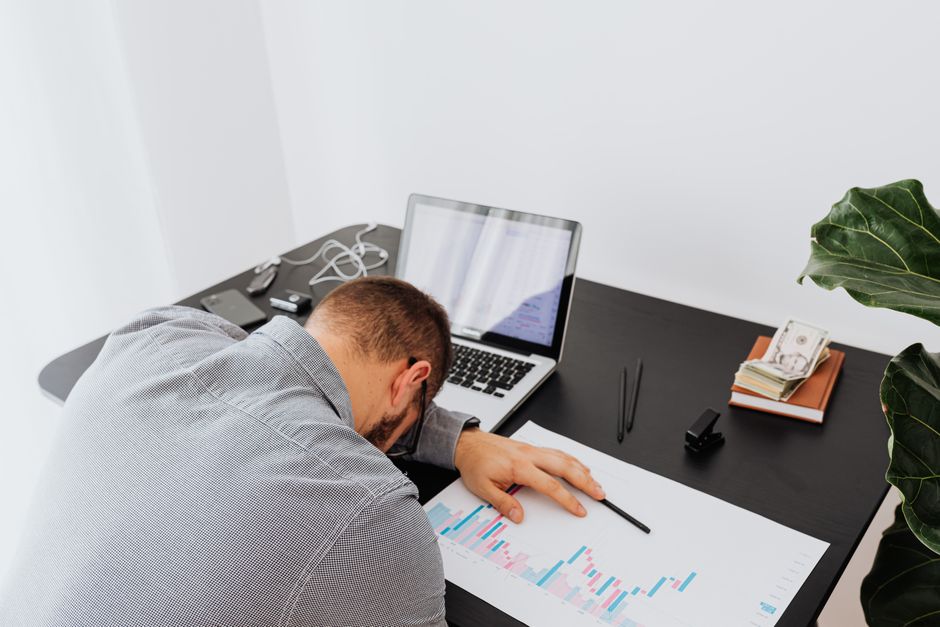
But here is the truth from the trenches: exhaustion is a physiological state, not a moral failing. When you’ve spent ten hours managing high-stakes deadlines, your cognitive resources are functionally bankrupt. Expecting to transition from that state into an "optimal" evening of deep reading or intense meal prepping isn't discipline; it’s an invitation to further burnout.
The American Psychological Association (APA) has spent years documenting how chronic stress depletes our executive function. When your attention is depleted, you lose the ability to perform complex tasks. Trying to force yourself into "productive" leisure when you’re already burned out usually results in one thing: total collapse by Thursday.
Passive Escape vs. Numbing
There is a distinct difference between using TV as a recovery tool and using it as a chemical-like numbing agent. This is where most people get tripped up.
Passive Escape is intentional. It is the act of choosing a low-stakes environment to let your prefrontal cortex go offline. You choose a show, you watch it, you enjoy the story, and you go to bed. You feel a sense of completion. You aren't avoiding your life; you are giving your nervous system a chance to downshift.
Numbing, on the other hand, is compulsive. You aren't watching the show; you’re doom-scrolling on your phone while the TV plays in the background, your thumb twitching to refresh a feed. You are looking for a dopamine hit because the silence of your own thoughts feels too heavy after a long day.
The "Tech-Friction" Reality Check
Think about your actual workday. How much of it is spent overcoming unnecessary digital friction? You log in, you encounter a Cloudflare Turnstile challenge page because the network thinks you’re a bot. You try to access a secure database, and you’re met with a series of reCAPTCHA verification images where you have to click every square that contains a traffic light. It’s dehumanizing. It’s repetitive, soul-sucking labor that demands constant vigilance.
When you finish a day of that, your brain is looking for a low-friction environment. This is why interactive "leisure" (like gaming, which can often feel like another job, or even complex strategy games on sites like MRQ) might https://goodmenproject.com/everyday-life-2/the-psychology-of-leisure-why-we-need-distraction-and-play/ actually be counterproductive for someone who is already suffering from attention depletion. Sometimes, your brain doesn't need to "solve" anything else. It needs the opposite of a reCAPTCHA—it needs zero obstacles.
Comparing Your Recovery Options
I’ve tracked my own "Tuesday recovery" habits for years. Here is how different leisure activities stack up when you’re genuinely burned out.
Why "Passive" Isn't Always Bad
One of the biggest lies in the wellness industry is that "passive" leisure is somehow inferior to "active" leisure. This is productivity guilt dressed up as virtue. If your job requires you to make 50 high-stakes decisions a day, "passive" TV is not lazy; it is an act of preservation.
My tiny notebook—the one I keep on my nightstand—is full of entries from weeks where I tried to be "productive" every night. Those weeks always ended in a blowout on Saturday where I spent twelve hours straight in front of a screen because I had suppressed my need for downtime all week. When you treat your leisure like a controlled recovery period rather than a test of your moral character, you actually find that you can handle more stress the next day.
How to Actually Decompress (Without the Guilt)
If you want to ensure your evening routine is actually working, you have to move from "default mode" to "intentional mode." You don't need a perfect weekend routine; you need a Tuesday night protocol.

The Final Word
I stopped caring about whether my leisure was "impressive" to others a long time ago. The guys who burn out the hardest are the ones who try to optimize their rest as strictly as they optimize their spreadsheets. You are not a machine that needs to be recalibrated; you are a human being who needs to disconnect from the grid.
If watching TV helps you clear the mental cache so you can face the next day without bitterness, then it is a high-value activity. Stop listening to the productivity gurus who think your downtime is a failure of will. They haven't spent eleven years managing a team, and they certainly haven't spent enough Tuesdays staring at a blank screen wondering why they feel so hollow. Take the rest. Watch the show. Protect your brain—it’s the only one you’ve got.